Swiss CBD Terroirs: Why the Pre-Alps Make All the Difference
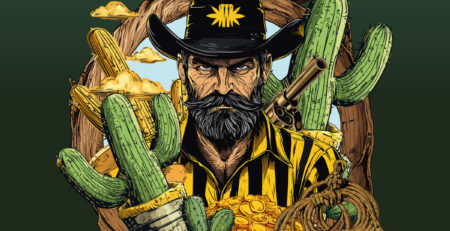
Sheriff Blackwood has ridden through many landscapes: the open plains of the Vaud Plateau, the snow-covered mountain passes of Valais, and the wood cellars of mountain chalets where hemp dries slowly, suspended between two seasons. After years of traveling these lands, he came to a simple conclusion: not all Swiss CBD flowers are created equal. And the difference isn’t determined in a lab. It’s determined in the soil, in the shadow of a ridge, beneath the wind that sweeps down from the Vaud Pre-Alps at dusk.
Wild Wild Weed grows its crops outdoors in that country. To understand how that affects what ends up in your cup—or in your bag—you need to understand the terroir.
The Climate of the Swiss Pre-Alps: Altitude, Sunshine, and Cool Nights
The Vaud Pre-Alps lie at altitudes between 700 and 1,500 meters, at the junction between the temperate Swiss Plateau and the Alpine mountain ranges. It is a climatic transition zone: summers there are warm during the day, with plenty of sunshine lasting until the end of September, but nights quickly turn sharply cool starting in August.
It is precisely this temperature range—the difference between 26 °C in the afternoon and 9 °C at dawn—that interests growers of outdoor CBD in the Pre-Alps.
The daytime heat causes the plant to work hard: it synthesizes its cannabinoids and terpenes in response to light stress and changes in humidity. At night, when it’s cold, it slows down. This alternation leads to a gradual buildup of resin on the trichomes—a process that no greenhouse can replicate exactly, because it depends on the natural rhythm of the sun on a specific ridge.
Sun exposure in the Vaud Pre-Alps benefits from a “compression effect”: south-facing slopes receive between 1,800 and 2,100 hours of sunshine per year, comparable to Vaud’s wine-growing regions. Hemp, like grapevines, thrives in these latitudes. It is no coincidence that Switzerland’s first vineyards and hemp fields have coexisted on these same hills for centuries.
Morning fog, which is common in the region’s valleys during the fall, also plays a role: it regulates leaf humidity and slows the opening of the stomata, forcing the plant to concentrate its secondary metabolites rather than dilute its energy through overly rapid growth.
Pre-Alpine soils: clay, limestone, and mineral-rich
The ground beneath the Sheriff’s feet is no ordinary soil. The soils of the Vaud Pre-Alps are the result of a long geological history: Mesozoic marine sedimentation, Alpine folding, and Quaternary glacial deposits. This history has produced a soil profile particularly well-suited to aromatic plants.
Calcareous clay predominates across much of the pre-Alpine slopes of the Canton of Vaud. This combination offers two contrasting yet complementary qualities: water retention during dry summer periods — preventing excessive water stress that can degrade the aromatic profile — and rapid drainage during autumn rains — protecting the roots from suffocation and pathogens associated with excess moisture.
Limestone has a direct impact on the plant’s chemistry. It slightly alkalizes the soil, promoting the uptake of certain minerals—magnesium, iron—that are involved in the biosynthesis of terpenes. It is this same geological foundation that gives certain Vaud grape varieties—Chasselas, Pinot Noir—their characteristic mineral notes. Hemp grown on these soils develops a distinctive aroma that connoisseurs recognize: dry, earthy notes, a slight vegetal freshness, and a spicy undertone.
The mineral richness of the pre-Alpine soil is also a matter of depth. The upper layers, enriched by centuries of alternating forest cover and pasture, provide active, living humus teeming with a complex microbial community. Mycorrhizae—those filamentous fungi that colonize plant roots—increase the plant’s effective absorption surface area and enable it to access trace elements that would otherwise be inaccessible.
It’s a silent alchemy. You can’t see it. You can feel it in the scent of a dried flower between your fingers.
Wild Wild Weed Outdoor in the Vaud Pre-Alps
Wild Wild Weed is an outdoor brand. Not just for show. It’s a deliberate choice that we’ve stuck with since the beginning of our Swiss Wild West adventure.
The outdoor buds from the Pre-Alps that the Sheriff ships in packages—Super Skunk, Gorilla Glue, Mango Haze, Strawberry—are grown outdoors, on the very lands we just mentioned. They grow under the same sky as the vineyards of Lavaux. They ripen under the same cool nights that have made the age-worthy wines of Vaud famous. They absorb the same minerals dissolved in spring water flowing down from the ridges.
The growing cycle follows the rhythm of the region: planting is done late to avoid nighttime frosts in May; flowers form during the long days of July; the grapes ripen gradually in August and September as the daily temperature range widens; and they are harvested by hand before the first October mists make the air too heavy.
This schedule is non-negotiable. Nature doesn’t negotiate.
The result: dense buds with aromatic profiles that evolve as they dry—often more complex upon opening than their controlled-cultivation counterparts, because the secondary terpenes are released gradually rather than all at once. The connoisseur who takes the time to smell it before lighting up will recognize the craftsmanship behind it.
In accordance with the Swiss Narcotics Act, all varieties have a THC content of less than 1%.
Comparison with Other Regions and Types of CBD Production
The Vaud Pre-Alps aren’t the only region producing premium Swiss CBD. Let’s see what else the menu has to offer—and how that translates to the glass.
Valais: Heat and Concentration
The Valais is undoubtedly the region that most closely resembles the Pre-Alps in terms of its potential. The slopes of Valais enjoy even more abundant sunshine—up to 2,200 hours per year in some valleys—rich volcanic and limestone soil, and a descending föhn wind that dries out and concentrates the aromas. Valais’s outdoor CBD crops are top-notch and well worth a visit. How does it differ from the Vaud Pre-Alps? Valais is drier, more exposed, and has even more pronounced daily temperature ranges. The flowers there are often resinous, but with more direct aromatic profiles—less complexity in the green and vegetal notes.
Indoor Growing on the Plateau: Reproducibility Over Terroir
Indoor cultivation in the Jura region or on the Swiss Plateau represents an entirely different model. There is no “terroir” in the strict sense: cultivation in a controlled greenhouse optimizes every parameter—calibrated light, injected CO₂, and dissolved nutrients. The result is consistent, dense, and visually perfect. High-quality Swiss indoor CBD is an excellent product. But it is of a different nature than outdoor-grown CBD: consistency replaces surprise, and reproducibility overshadows uniqueness. It’s not inferior—it’s simply something else.
European outdoor cuisine: generic origins vs. identifiable regional characteristics
Portugal, Spain, Northern Italy, Alsace—European outdoor cannabis is grown under conditions that are comparable to or superior in terms of heat and sunlight. These crops supply a large portion of the market Swiss CBD. The difference lies in the minerality and traceability of the terroir: growing in the Vaud Pre-Alps means a specific location, identifiable soil, and a measurable altitude. It is not a generic place of origin.
The trend toward Swiss terroir CBD, driven by the most discerning producers, is moving in the same direction as fine wines: emphasizing geographic uniqueness rather than industrial optimization. This movement is only just beginning to realize its full potential in the Swiss market.
The Wild West Has an Address
Terroir can’t be invented. You can optimize it, choose it, and take care of it—but you can’t create it from scratch in a clean room.
Sheriff Blackwood chose the Vaud Pre-Alps because the land there works in his favor. The altitude, the cool nights, the clay-limestone soil, the microbiology of the mountain meadows—all of these factors contribute to the final character of the flower that ends up in your pouch.
Wild Wild Weed stays outdoors. That’s its identity, its territory, its challenge.
Saddle up your horse. The flowers of the season are waiting for you.
Sheriff Blackwood
Sheriff Blackwood est le gardien des plaines sauvages du CBD suisse. Ancien éclaireur solitaire, il parcourt encore les pistes poussiéreuses du Far West moderne à la recherche des meilleurs produits, des plus belles fleurs et des histoires vraies qui font vibrer l’univers Wild Wild Weed. Toujours entre deux colts et un grinder en bois poli, il partage ses découvertes, ses conseils et les secrets de la qualité suisse — sans jamais quitter son chapeau. Un ton franc, un style affûté, et une mission : éclairer les riders du Wild sur tout ce qui touche au CBD. Sheriff Blackwood — Chroniqueur officiel des terres sauvages de Wild Wild Weed.
Keep riding
Best CBD in Switzerland 2026 — The Sheriff’s Guide
Sheriff Blackwood cuts to the chase: what sets the best Swiss CBD apart in 2026. Terroir, outdoor extraction, LStup compliance,...Swiss Outdoor CBD Flowers — The True Fresh Air of the Pre-Alps
Swiss outdoor CBD flowers grown under the open sky of the Vaud Pre-Alps. Terroir, temperature range, and an aromatic profile...CBD Hash Switzerland 🤠 Artisanal & Legal | Wild Wild Hash
Artisanal Swiss CBD hash: Golden Moroccan, Golden Lebanese, Golden Charras. Bubble Hash, Charas, Press. Delivery in Switzerland within 24–48 hours....Swiss CBD Flowers — The Legendary Strains from Calamity Weed
Swiss CBD Flowers: Indoor, Outdoor, and Greenhouse — Wild Wild Weed’s legendary strains await you: Gorilla Glue, Mango Haze, Super...Artisanal Swiss CBD Hash — The Daltons’ Loot | Wild Wild Weed
Artisanal Swiss CBD hash: Discover the traditions of Morocco, Lebanon, and India, reimagined with a Swiss twist. THC <, 1%...Complete guide to CBD Switzerland 2026: everything you need to know to make the right choice
Sheriff Blackwood's complete guide: definition, legality, growing methods, quality, how to choose your Swiss CBD in 2026. The modern cowboy's...Top 10 best Swiss CBD strains to discover
Our selection of the 10 must-have Swiss CBD strains in 2026: Gorilla Glue, Strawberry, Super Skunk, and more. Sheriff Blackwood's...How to recognize a real Hash CBD: a connoisseur’s guide
Visual, olfactory and tactile profiles: all the criteria you need to distinguish a genuine artisan hash from a counterfeit. Sheriff...Indoor, Outdoor or Greenhouse: which Swiss CBD to choose?
The definitive comparison of Switzerland's three major CBD growing methods. Aromatic profiles, visual qualities, prices, and who each type is...CBD legislation in Switzerland: everything the law says in 2026
Complete legal framework for CBD in Switzerland: Narcotics Law, THC levels, cantonal authorizations, EU comparison. The reference guide.THC/CBD ratio: why a flower with 20% CBD and 0.3% THC does not exist naturally
A cannabis flower cannot naturally display 20% CBD and only 0.3% THC. Let's decipher the isolate manipulations circulating on the...
Golden Lebanese – Emery Dalton and the red lands of the Levant
Emery Dalton roamed the mountains of the Levant to bring back the art of Red Lebanese, a warm, spicy, dense...
Golden Moroccan – Boone Dalton and the road to the sun
Boone Dalton took the southern route to bring back a sunny, golden-brown hash, a perfect blend of Moroccan traditions and...Golden Pollen – Grant Dalton and the gold dust of the Far West
Grant Dalton saw gold where no one else looked: the fine resin dust that became Golden Pollen, a dry, intensely...
The Swiss CBD epic: the modern Wild West
There was a time when the Swiss mountains resounded only to the sound of bells, horses and the cold wind...
The Dalton’s – The bandits who brought hash to the Wild West
There are stories that are told around a fire, late at night, when the mountains fall silent and only the...
Sitting Bull – The man who turned leftovers into gold
In the silent recesses of the drying sheds and barns where the plant is worked like a treasure, there's a...